Presbyopia: Why Reading Gets Harder After 40 and What Helps
Holding your phone at arm’s length to read it? Needing brighter light to read a restaurant menu? If you’re around 40 or older, you’re most likely noticing presbyopia — a natural change that happens to almost everyone.
What is presbyopia?
Inside your eye is a natural lens that changes shape to focus on close objects. This is called accommodation. With age, the lens gradually stiffens, so focusing up close gets harder little by little.
Presbyopia isn’t the same as hyperopia (farsightedness). Hyperopia comes from the shape of the eye and can be present from childhood, while presbyopia is the aging of the lens that happens to everyone — including people who were already nearsighted.
Signs of presbyopia
- Holding books or your phone farther away to read clearly.
- Small print looks blurry, especially in dim light.
- Tired eyes or headaches after reading or detailed work.
- If you’re nearsighted: reading is easier with your glasses off.
How it progresses
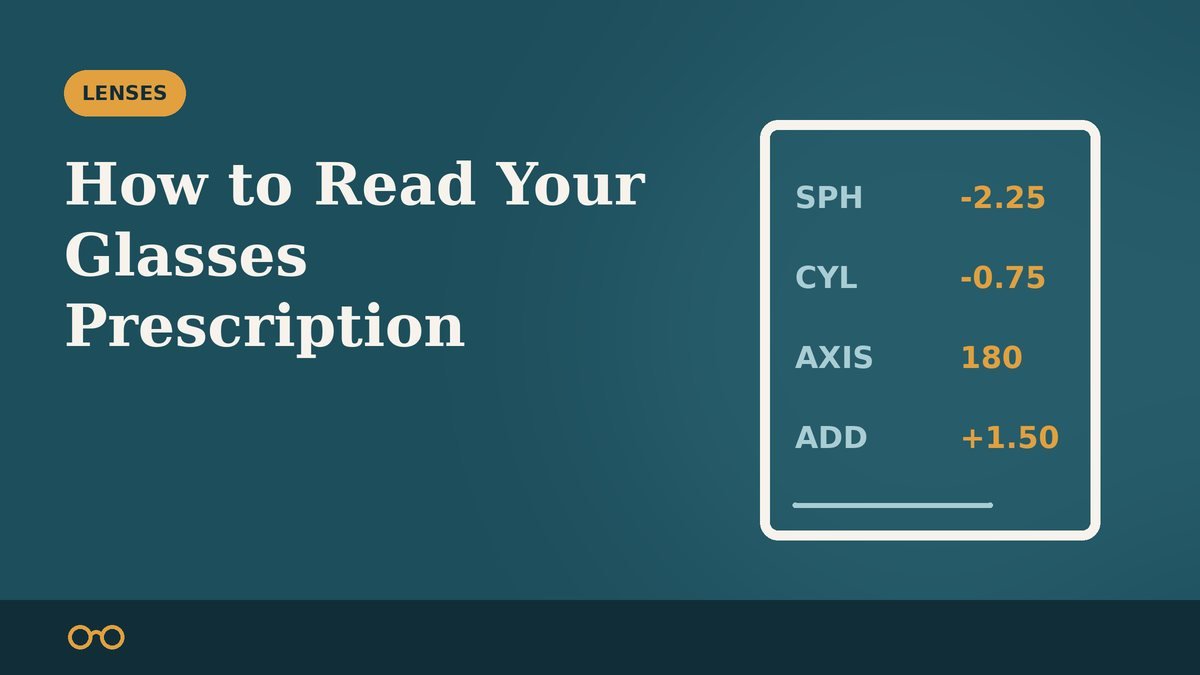
Presbyopia usually becomes noticeable between 40 and 45 and keeps increasing until about 60, when it tends to level off. On a prescription, your reading needs appear as ADD, which usually starts around +0.75 to +1.00 and can reach about +2.50 by your 60s.
Your options
1. Reading glasses
A good fit if your distance vision is fine. Cheap and simple, but you have to take them off to see far away. Drugstore readers have the same power in both lenses and no astigmatism correction, so they’re less ideal if your eyes differ.
2. Bifocals
One lens with two zones — distance on top, reading on the bottom — separated by a visible line. More affordable, but images “jump” when your gaze crosses the line, and there’s no zone for mid-range tasks like a computer screen.
3. Progressives
Power changes gradually from distance to intermediate to near with no line. The most convenient everyday option, though it takes some getting used to. Read our progressive lens guide.
4. Office (degressive) lenses
Designed for intermediate and near distances, with wider zones than progressives. Ideal for long computer sessions, but not for driving.
5. Multifocal contact lenses
An option if you’d rather not wear glasses. Vision quality can involve some trade-offs, so try them with guidance from an optometrist.
Not sure which to choose? Take our Eye Comfort Check. Based on your age, symptoms, and activities, it suggests the lens type that fits you best.
Everyday tips
- Use bright, even lighting when reading.
- Increase the font size on your phone and computer.
- Get your eyes checked every 1–2 years, since your ADD will change.
- Eye exams in your 40s also help catch other conditions early, such as glaucoma.
This article is for education only and is not a substitute for an eye exam.