


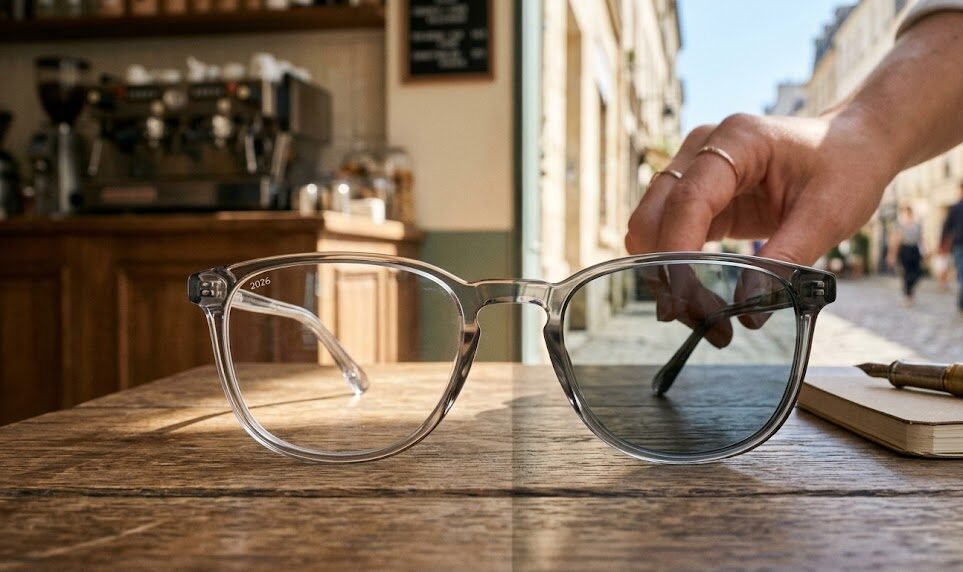
The first time I truly appreciated photochromic lenses wasn’t during a marketing demo or product review—it was during a long afternoon walk that unexpectedly turned into a full day under changing weather. I started in bright sunlight, transitioned into shaded streets, and ended under dim evening skies. My lenses adapted quietly the entire time. No switching glasses, no fumbling for sunglasses, no interruption in focus. It felt like my vision had its own intelligent assistant.
That experience pushed me to explore just how far photochromic technology has come in 2026. What used to be a slow, sometimes unreliable feature has evolved into a highly refined optical innovation used by professionals, travelers, students, and everyday eyewear users around the world. Today’s photochromic lenses are faster, clearer, more adaptive, and more stylish than ever before.
SEE ALSO >>> Transition Lens Technology Explained: How Light-Adaptive Glasses Are Changing Modern Vision
This guide explores the best photochromic lenses in 2026, how they work, their strengths and limitations, real-world case studies, and how to choose the right pair based on lifestyle needs.
What Makes Photochromic Lenses Special?
Photochromic lenses are designed to automatically adjust their tint based on UV light exposure.
In simple terms:
- Indoors → clear vision
- Outdoors → tinted protection
Unlike traditional sunglasses, they respond dynamically to environmental changes without manual intervention.
Modern lenses use advanced molecular structures embedded within the lens material, allowing smoother and faster transitions compared to earlier generations.
How Modern Photochromic Technology Works
At the core of photochromic lenses is a light-sensitive chemical reaction.
When UV radiation hits the lens, molecular structures change shape, causing the lens to darken. Once UV exposure decreases, the molecules return to their original state, restoring clarity.
This simplified relationship reflects how tint intensity increases with UV exposure levels.
Modern systems improve on this basic principle through:
- Faster-reacting molecules
- Enhanced temperature stability
- Multi-layer coating systems
- Nano-structured lens surfaces
These advancements make today’s lenses significantly more responsive and consistent.
What Defines the “Best” Photochromic Lenses in 2026?
Not all photochromic lenses perform equally.
The best options in 2026 are evaluated based on:
- Speed of transition
- Indoor clarity
- Darkening intensity outdoors
- UV protection efficiency
- Temperature stability
- Color options
- Durability and coating quality
The most advanced lenses now deliver near-instant adaptation in optimal conditions and maintain high clarity indoors, making them suitable for daily all-day wear.
Top Categories of Photochromic Lenses in 2026
Rather than focusing only on brands, it’s more useful to understand categories of performance.
1. Fast-Transition Premium Lenses
These are designed for users who frequently move between indoor and outdoor environments.
Key benefits:
- Rapid darkening response
- Smooth fading indoors
- High optical clarity
- Balanced tint performance
They are especially popular among urban professionals and commuters.
2. High-Performance Outdoor Lenses
Built for strong sunlight exposure and outdoor activities.
Strengths include:
- Deep dark tint
- Strong UV protection
- Enhanced glare reduction
- Durable coating systems
Ideal for hikers, cyclists, and travelers.
3. Everyday Comfort Lenses
Designed for general use.
Features:
- Moderate transition speed
- Comfortable indoor clarity
- Balanced outdoor tint
- Affordable pricing range
These are the most widely used globally.
4. Blue-Light Integrated Photochromic Lenses
A growing category in 2026.
They combine:
- UV adaptation
- Blue light filtering
- Digital eye strain reduction
Perfect for hybrid digital-outdoor lifestyles.
Case Study: Urban Professional vs Outdoor Traveler
Case 1: Urban Office Worker
Daily routine:
- Office environment
- Occasional outdoor commuting
- High screen exposure
Photochromic lenses provide:
- Reduced need for sunglasses
- Comfort during lunch breaks outdoors
- Simplified eyewear routine
Result: Improved daily convenience and reduced eye fatigue.
Case 2: Adventure Traveler
Daily routine:
- Hiking and outdoor exploration
- Variable sunlight conditions
- Long exposure to UV rays
Photochromic lenses provide:
- Continuous eye protection
- Adaptive tint during altitude changes
- Reduced glare in open environments
Result: Better visual comfort and safety in dynamic conditions.
Data Insight: Rising Adoption of Adaptive Eyewear
The eyewear industry has seen steady growth in photochromic lens adoption.
Key trends include:
- Increased screen time awareness
- Growth in outdoor recreational activities
- Aging global population requiring vision correction
- Demand for multifunctional eyewear solutions
Industry forecasts suggest continued expansion as users prioritize convenience and eye health in a single product.
Opportunity Analysis Table
| User Type | Benefit Level | Best Lens Type |
|---|---|---|
| Office Workers | High | Everyday Comfort Lenses |
| Travelers | Very High | Fast-Transition Premium |
| Outdoor Athletes | Very High | High-Performance Outdoor |
| Students | High | Everyday + Blue-Light Hybrid |
| Drivers | Medium | Limited effectiveness indoors |
| Digital Professionals | High | Blue-Light Integrated |
This table highlights how lifestyle strongly influences lens selection.
Expert Perspective: Why Technology Alone Isn’t Enough
One common misconception is that the “best” lens is simply the fastest or darkest.
In reality, performance must match usage patterns.
For example:
- A lens that darkens too slowly may frustrate commuters
- A lens that is too dark indoors may reduce comfort
- A lens optimized for outdoor sports may not suit office environments
The best photochromic lens is not the most advanced—it is the most compatible with your daily life.
Key Improvements in 2026 Photochromic Lenses
Modern lenses have improved significantly compared to earlier generations.
Faster Adaptation
Transition times are now noticeably shorter, improving real-world usability.
Better Indoor Transparency
Lenses remain clearer indoors, reducing the “gray tint” effect seen in older versions.
Wider Tint Range
Some premium lenses adjust across multiple shading levels depending on UV intensity.
Enhanced Durability
Advanced coatings improve scratch resistance and long-term clarity.
Real-World User Experience Patterns
Across user feedback, several consistent observations emerge:
- High satisfaction in mixed indoor-outdoor lifestyles
- Reduced dependence on separate sunglasses
- Improved comfort during long outdoor exposure
- Occasional limitations in driving environments
Overall satisfaction increases significantly when users understand the technology’s strengths and limitations.
The Future of Photochromic Lenses
The next generation of adaptive lenses is expected to include:
- Electrochromic digital tint control
- AI-driven light adaptation systems
- Real-time environmental sensing
- Smart eyewear integration
- Health-monitoring optical systems
These innovations will transform photochromic lenses from passive materials into active vision-enhancing technologies.
Final Thoughts
The best photochromic lenses in 2026 represent a major leap forward in optical convenience and visual comfort. They are no longer a niche feature but a mainstream solution for people seeking seamless vision adaptation throughout their day.
Whether you are navigating city streets, working long hours indoors, or exploring outdoor environments, modern photochromic lenses offer a practical balance of protection, clarity, and convenience.
The key is not choosing the most expensive option—but selecting lenses that align with your lifestyle, visual needs, and daily environment.
In a world where flexibility is everything, photochromic lenses quietly deliver one of the simplest yet most effective upgrades to everyday vision.
