



Learn the truth about blue light glasses, how they work, whether they reduce eye strain, and if they’re genuinely helpful or simply clever digital-age marketing.
There was a time when glasses existed for two simple reasons: you couldn’t see properly, or you wanted to look smarter during group projects. Then suddenly the internet discovered blue light. Overnight, screens became suspicious glowing rectangles allegedly attacking our sleep, our eyes, and possibly our entire civilization. Enter blue light glasses — the modern digital-age hero wrapped in stylish transparent lenses and marketing buzzwords.
Today, blue light glasses are everywhere. Tech influencers wear them while editing videos at 2 a.m. Office workers buy them after one exhausting Zoom meeting. Students wear them during late-night study sessions even if they mainly spend half the time scrolling memes and watching cooking videos they’ll never actually cook.
But here’s the real question: do blue light glasses genuinely help, or are they simply one of the most successful wellness accessories of the digital era?
The answer is a little more complicated than most advertisements would like you to believe.
SEE THIS: Best Eyewear for Small Faces: A Complete Guide to Finding the Perfect Fit
What Is Blue Light, Exactly?
Blue light is part of the visible light spectrum. It exists naturally in sunlight and also comes from digital screens, LED lights, smartphones, tablets, televisions, and laptops.
Not all blue light is bad. In fact, natural blue light from the sun helps regulate alertness, mood, and sleep cycles during the day. Without it, humanity would probably spend afternoons accidentally napping in grocery stores.
The issue begins when we’re exposed to artificial blue light late at night — especially from screens held six inches away from our exhausted faces while we whisper, “Just one more episode.”
Artificial blue light exposure during evening hours may interfere with melatonin production, the hormone responsible for helping us sleep.
That’s where blue light glasses enter the conversation.
What Do Blue Light Glasses Actually Do?
Blue light glasses use specially designed lenses that filter or block portions of blue-violet light emitted from digital devices.
Some lenses block only a small percentage, while others have more aggressive filtering technology. You may notice slight yellow or amber tints in certain blue light lenses because warmer colors help reduce blue wavelengths.
The primary claims surrounding blue light glasses usually include:
- Reduced digital eye strain
- Better sleep quality
- Fewer headaches
- Improved screen comfort
- Protection against long-term eye damage
Sounds impressive. Almost suspiciously impressive.
The challenge is that not every claim has equally strong scientific support.
The Real Cause of Digital Eye Strain
Before blaming blue light for everything, it’s important to understand what actually causes most screen-related discomfort.
Digital eye strain is often caused by:
- Staring at screens for too long
- Reduced blinking while using devices
- Poor posture
- Brightness imbalance
- Dry eyes
- Improper viewing distance
In other words, your eyes may hurt less because of “blue light apocalypse” and more because you’ve been hunched over a laptop like a medieval goblin for six consecutive hours.
Many symptoms people blame on blue light are actually connected to screen habits themselves.
This distinction matters.
Do Blue Light Glasses Reduce Eye Strain?
Here’s where things become interesting.
Some users genuinely report feeling more comfortable wearing blue light glasses during long screen sessions. Reduced glare and slight contrast adjustments may create a more relaxed viewing experience.
However, scientific evidence remains mixed.
Several studies suggest blue light glasses may help certain individuals subjectively feel less eye fatigue, while other research finds limited measurable differences compared to standard lenses.
That doesn’t necessarily mean blue light glasses are useless. Comfort itself has value. If wearing them helps someone tolerate long workdays more comfortably, that experience is still real.
But the dramatic “miracle eye protection” marketing often stretches far beyond what science currently confirms.
Blue Light and Sleep: The Stronger Argument
The strongest evidence supporting blue light management involves sleep quality rather than eye damage.
Exposure to bright screens late at night can suppress melatonin production and delay sleep onset. This is why doom-scrolling social media at midnight somehow transforms “I’ll sleep early tonight” into a philosophical crisis at 2:13 a.m.
Blue light glasses may help reduce this effect, especially when worn during evening screen use.
That said, there’s an important detail people forget:
Lowering screen brightness, enabling night mode, and reducing device usage before bed can also help significantly.
The glasses aren’t magic. They’re more like one helpful tool among several better habits.
Can Blue Light Damage Your Eyes Permanently?
This is one of the biggest marketing fears used in advertisements.
Current scientific evidence does not strongly support the idea that blue light from regular digital screens causes permanent retinal damage in everyday use.
The amount of blue light emitted from screens is far lower than natural sunlight exposure. If your phone were truly destroying your eyes at catastrophic levels, humanity would probably need emergency cave shelters by now.
Most major eye health organizations agree there’s insufficient evidence showing digital blue light causes long-term eye disease directly.
That doesn’t mean screen overuse is harmless overall — but the situation is less dramatic than some ads suggest.
Why Blue Light Glasses Became So Popular
Blue light glasses exploded in popularity because they sit perfectly at the intersection of technology, wellness, fashion, and modern anxiety.
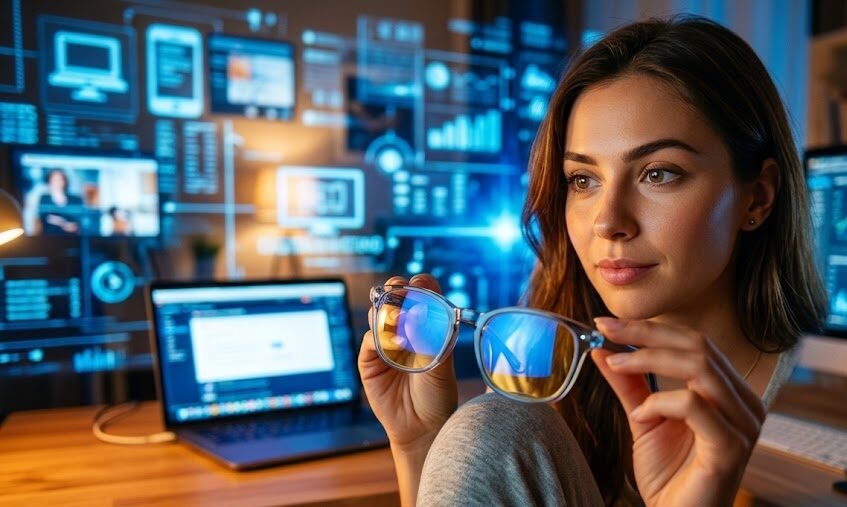
Think about it:
- We spend enormous amounts of time on screens
- People constantly feel tired and overstimulated
- Wellness culture loves simple solutions
- Stylish glasses already function as fashion accessories
Blue light glasses became the perfect modern product. They offer both a visible lifestyle upgrade and the comforting feeling of “doing something healthy.”
Even if someone buys them partially for aesthetics, there’s nothing inherently wrong with that.
Honestly, some blue light glasses look so stylish they could probably convince people they suddenly became startup founders.
Are Expensive Blue Light Glasses Better?
Not always.
Many affordable blue light lenses perform similarly to expensive designer versions. The difference often comes down to frame quality, coatings, branding, and comfort rather than dramatically superior blue light filtering.
Some companies market blue light glasses almost like luxury technology armor for your eyeballs. In reality, many users benefit just as much from simpler options.
The key factors are:
- Lens comfort
- Proper prescription (if needed)
- Anti-reflective coating
- Overall frame quality
- Personal comfort during use
Sometimes the best purchase is simply the pair you’ll consistently wear.
Who Might Benefit Most From Blue Light Glasses?
While not everyone absolutely needs them, some groups may find them genuinely helpful.
Office Workers
People spending 8–10 hours daily staring at monitors may appreciate reduced glare and improved comfort.
Gamers
Long gaming sessions often involve intense screen exposure in dark rooms, especially late at night.
Students
Students balancing laptops, tablets, and smartphones throughout the day may notice less visual fatigue with supportive screen habits.
Nighttime Screen Users
Anyone working late evenings or using devices before sleep may benefit from blue light reduction strategies.
Especially people who say, “I’ll sleep after this one video,” and somehow wake up watching conspiracy theories about ancient civilizations and microwave ovens.
Are Blue Light Glasses Worth Buying?
This depends entirely on expectations.
If you expect them to:
- Instantly cure headaches
- Eliminate fatigue
- Protect you from all screen-related problems
- Turn you into a productivity machine
…then disappointment may arrive quickly.
But if you view them as:
- A possible comfort improvement
- A sleep-supporting tool
- A helpful addition to healthier screen habits
- A stylish accessory for digital lifestyles
…then they may absolutely feel worthwhile.
The biggest mistake is treating them as a complete replacement for better screen behavior.
No pair of glasses can defeat 14 consecutive hours of screen exposure powered entirely by caffeine and poor posture.
Better Alternatives and Habits
Sometimes simple lifestyle changes make a bigger difference than specialized lenses.
Use the 20-20-20 Rule
Every 20 minutes, look at something 20 feet away for 20 seconds.
Your eyes deserve tiny vacations too.
Reduce Nighttime Screen Brightness
Lower brightness levels and enable warm display settings in the evening.
Blink More Often
Seriously. People blink less while staring at screens, leading to dryness and irritation.
Improve Lighting
Avoid working in extremely dark rooms with bright screens.
Sleep Better
Good sleep improves eye comfort more than most people realize.
Your eyes are attached to an entire human body, unfortunately. Everything connects.
The Psychology Behind Blue Light Glasses
Part of the success of blue light glasses comes from perception and behavior.
When people buy wellness-related products, they often become more conscious of their habits overall. Someone wearing blue light glasses may also:
- Take more screen breaks
- Adjust lighting
- Sleep earlier
- Use night mode
- Think more about eye health
In this way, the glasses become part of a broader behavioral shift rather than the sole solution themselves.
Sometimes the accessory changes the mindset.
And honestly, humans have always loved symbolic tools. Medieval knights had armor. Modern office workers have anti-blue-light eyewear and ergonomic chairs.
Evolution is fascinating.
Final Thoughts
Blue light glasses exist somewhere between useful technology and exceptionally effective marketing.
They are not fake. Many people genuinely enjoy improved comfort and better nighttime screen experiences while wearing them. At the same time, some claims surrounding blue light glasses are exaggerated far beyond current scientific evidence.
The smartest perspective is balanced realism.
Blue light glasses may help reduce screen discomfort and support healthier evening screen habits, especially for heavy device users. But they are not magical shields against every digital-age problem.
Good sleep, regular breaks, proper lighting, and healthier screen habits still matter far more.
In the end, blue light glasses work best not as miracle solutions — but as supportive tools in a world where most of us spend half our lives staring into glowing rectangles pretending we’re “just checking one thing quickly.”
FAQ
What are blue light glasses used for?
Blue light glasses are designed to filter portions of blue light emitted from digital screens to improve screen comfort and potentially support better sleep quality.
Do blue light glasses really work?
They may help some people feel more comfortable during long screen sessions and may reduce sleep disruption from nighttime screen use, though scientific evidence is mixed.
Can blue light from screens damage your eyes permanently?
Current evidence does not strongly support the idea that normal screen exposure causes permanent eye damage from blue light alone.
Are blue light glasses good for gaming?
Many gamers use blue light glasses to reduce glare and improve comfort during long gaming sessions, especially at night.
Should I wear blue light glasses all day?
You can, but they are most commonly used during extended screen time or evening device use.
Are expensive blue light glasses worth it?
Not always. Comfort, lens quality, and proper fit usually matter more than luxury branding.
