


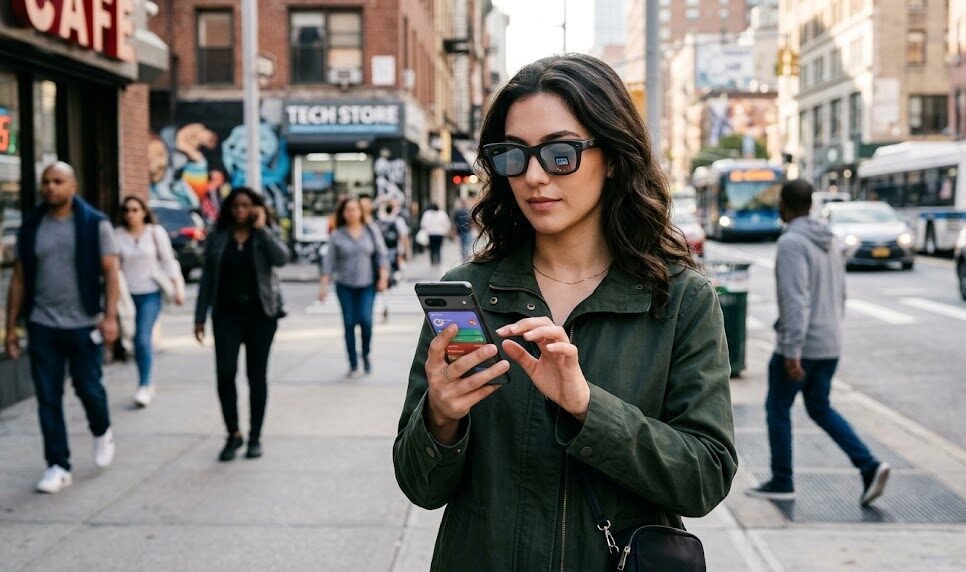
For years, smartphones have ruled modern life like tiny glowing emperors in our pockets. They wake us up, guide us through traffic, remind us about meetings, entertain us during awkward waiting moments, and somehow still convince us to watch “just one more video” at 2 AM. But technology never stays still for long. Every dominant gadget eventually faces the same question:
“What comes next?”
Right now, smart glasses are becoming the strongest candidate for that future. What once looked like clunky science-fiction props is rapidly evolving into sleek wearable technology powered by artificial intelligence, augmented reality, voice assistants, cameras, and real-time information systems. Suddenly, the idea of replacing smartphones doesn’t sound impossible anymore.
The appeal is obvious. Smartphones require constant physical interaction. You pull them out, unlock them, stare downward, type endlessly, and accidentally open the camera while trying to check notifications. Smart glasses promise something different: technology that blends naturally into human movement and vision.
Instead of looking down at screens, information could appear directly within your field of view. Calls, directions, translations, reminders, messages, and AI assistance may eventually happen seamlessly through eyewear. It sounds futuristic — because it is — but pieces of that future are already here.
The real question is no longer whether smart glasses are possible.
The real question is whether they could become the next smartphone revolution.
Why Smartphones May Eventually Reach Their Limits
Smartphones changed the world because they combined communication, internet access, entertainment, navigation, photography, and productivity into one portable device. For over a decade, they’ve remained the center of digital life.
But innovation in smartphones has started slowing down. Every year brings slightly better cameras, slightly faster processors, and slightly shinier marketing videos where someone dramatically photographs coffee in slow motion.
The basic smartphone experience hasn’t fundamentally changed in years.
This creates an opportunity for new technology categories. Historically, major tech shifts happen when devices become:
- More natural
- More immersive
- More portable
- More integrated into daily behavior
Smart glasses check every one of those boxes.
Instead of holding technology in your hand, you wear it. That difference may sound small, but it changes how humans interact with information entirely.
What Smart Glasses Can Already Do
Modern smart glasses are far more advanced than many people realize. Some already offer:
- Hands-free calling
- Music playback
- AI voice assistants
- Real-time notifications
- Photo and video recording
- Navigation support
- Augmented reality displays
- Translation features
Devices like Meta Ray-Ban Smart Glasses and XREAL AR glasses show how rapidly wearable technology is improving.
Today’s smart glasses still rely heavily on smartphones for processing and connectivity, but the direction is clear. Companies are building toward more independent wearable systems capable of handling increasingly complex tasks.
In simple terms:
your glasses are slowly learning how to become tiny computers.
That’s either exciting or the beginning of a sci-fi movie. Possibly both.
Why Smart Glasses Make Sense as the Next Big Device
Hands-Free Convenience
One of the biggest weaknesses of smartphones is that they constantly demand attention and physical interaction. Smart glasses reduce this friction dramatically.
Imagine:
- Getting directions without checking a phone
- Reading messages through voice audio
- Recording moments instantly
- Accessing AI assistance while walking
- Taking calls without holding anything
This creates a more fluid relationship between humans and technology. Instead of stopping life to use devices, technology becomes part of movement itself.
Convenience has always driven tech evolution, and smart glasses offer a level of convenience smartphones cannot fully match.
Augmented Reality Changes Everything
Augmented reality may become the biggest reason smart glasses eventually surpass smartphones.
AR overlays digital information directly onto the real world. Instead of staring at separate screens, users interact with blended digital and physical environments simultaneously.
Future smart glasses could potentially:
- Display navigation arrows on roads
- Translate foreign signs instantly
- Identify products in stores
- Show live sports statistics
- Create virtual workspaces
- Assist with education and training
This transforms technology from something we look at into something we experience around us.
Smartphones feel powerful.
Augmented reality feels transformational.
AI Integration Feels More Natural in Glasses
Artificial intelligence becomes significantly more useful when combined with wearable devices. Smart glasses allow AI assistants to interact continuously with the surrounding environment.
Future AI-powered glasses may:
- Understand visual context
- Recognize objects and locations
- Provide live recommendations
- Summarize conversations
- Offer instant information
- Assist with productivity tasks
Instead of opening apps manually, users could interact conversationally with AI throughout daily life.
The future may involve asking your glasses questions the same way people currently ask phones or smart speakers.
Hopefully with fewer moments of yelling:
“WHY ARE YOU NOT RESPONDING?”
Why Smart Glasses Haven’t Replaced Smartphones Yet
Despite the excitement, smart glasses still face major challenges.
Battery Life Problems
Advanced wearable technology requires power, and batteries remain one of the biggest obstacles. Lightweight glasses can only hold limited battery capacity without becoming bulky or uncomfortable.
Users expect all-day functionality from modern devices, which is difficult for compact smart glasses to achieve consistently.
Nobody wants glasses that die halfway through lunch.
Privacy Concerns
Wearable cameras and always-on microphones create understandable privacy fears. People may feel uncomfortable not knowing whether they’re being recorded or monitored.
Society still hasn’t fully adjusted to wearable recording technology. Smart glasses need clear privacy systems and social acceptance before becoming mainstream.
Otherwise, every conversation starts feeling like an accidental documentary.
Design and Comfort Challenges
Glasses must remain lightweight, comfortable, and stylish. Unlike smartphones, wearable devices sit directly on the human face for long periods.
This creates unique design challenges:
- Weight balance
- Heat management
- Lens integration
- Durability
- Fashion appeal
If smart glasses look awkward or uncomfortable, mass adoption becomes difficult.
People want futuristic technology.
They do not necessarily want to look like astronauts ordering iced coffee.
Smartphones Are Still Extremely Powerful
The smartphone ecosystem is deeply established. Phones already handle communication, entertainment, banking, photography, gaming, productivity, shopping, navigation, and social media incredibly well.
Replacing smartphones entirely requires smart glasses to match or exceed this flexibility.
That won’t happen overnight.
More realistically, smart glasses may initially work alongside smartphones before gradually taking over specific tasks.
Technology transitions usually happen slowly… until suddenly they don’t.
Industries Betting Big on Smart Glasses
Major technology companies are investing heavily in wearable eyewear because they see enormous future potential.
Companies developing smart glasses include:
- Meta
- Apple
- Samsung
- XREAL
- Microsoft
These companies understand that the next major computing platform may not fit in pockets anymore.
It may sit directly in front of human eyes.
Could Smart Glasses Replace Smartphones Completely?
Eventually? Possibly.
Soon? Probably not.
Smartphones remain too versatile and deeply integrated into daily life to disappear quickly. However, smart glasses may gradually absorb more smartphone functions over time.
The likely future is hybrid usage:
- Smartphones for heavy tasks
- Smart glasses for quick interaction
- AI systems connecting everything together
Over the next decade, smart glasses could become the primary interface for communication, navigation, notifications, and augmented reality experiences.
The shift may feel similar to how smartphones slowly replaced cameras, MP3 players, GPS devices, and even wallets.
Technology rarely destroys old devices instantly.
It slowly absorbs their purpose.
The Social Impact of Smart Glasses
If smart glasses become mainstream, they could fundamentally change human behavior.
People may:
- Spend less time staring downward
- Interact more naturally with information
- Navigate cities differently
- Work inside virtual environments
- Communicate through real-time translation
- Blend digital life with physical surroundings
At the same time, concerns about digital overload, surveillance, and constant connectivity may increase.
Humanity somehow managed to become addicted to rectangle screens. Imagine what happens when technology literally sits on our faces all day.
The future will be fascinating… and probably very weird.
Conclusion
Smart glasses represent one of the most exciting technological shifts since the rise of smartphones. By combining wearable design, augmented reality, AI integration, and hands-free convenience, they offer a vision of computing that feels more natural and immersive than traditional screens.
Devices from companies like Meta, Apple, and XREAL prove that the industry is moving rapidly toward wearable digital experiences.
Smartphones are not disappearing tomorrow. But smart glasses are steadily positioning themselves as the next major platform in personal technology.
The future may not live in your pocket anymore.
It may quietly sit on your face while reminding you to answer emails and drink more water.
FAQ
What are smart glasses?
Smart glasses are wearable devices that combine eyewear with technology features such as AI, audio, augmented reality, cameras, and notifications.
Can smart glasses replace smartphones?
Not fully yet, but smart glasses may eventually handle many smartphone tasks like navigation, communication, and information access.
Why are companies investing in smart glasses?
Tech companies believe wearable computing and augmented reality represent the next major evolution of personal technology.
What are the biggest challenges for smart glasses?
Battery life, privacy concerns, comfort, fashion design, and software ecosystems remain major obstacles.
Are smart glasses already available?
Yes. Several companies already sell smart glasses focused on audio, AI assistance, and augmented reality experiences.
Will augmented reality become mainstream?
Many experts believe augmented reality will become increasingly common as wearable devices improve and become more affordable.
