


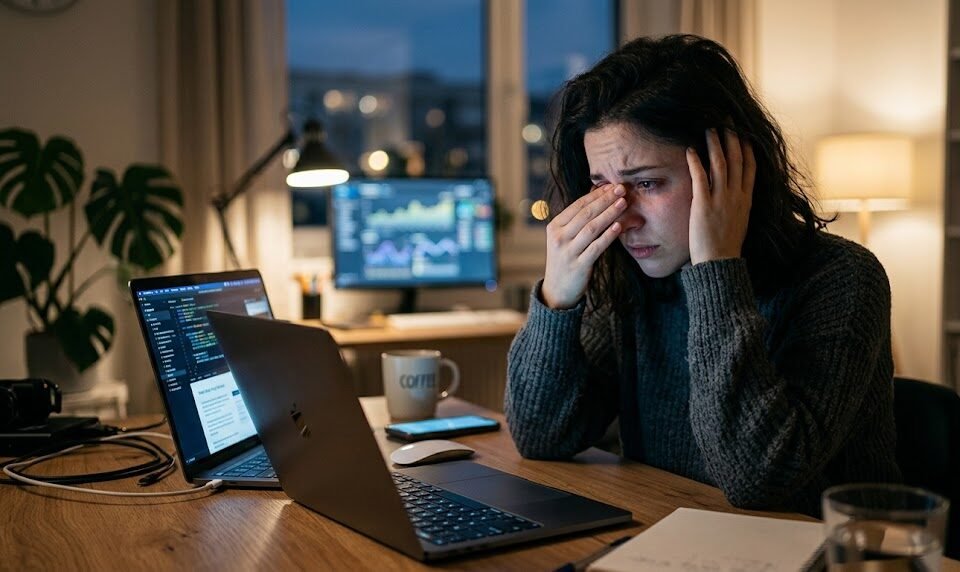
Learn what causes digital eye strain, common symptoms, and practical ways to reduce tired eyes, headaches, dryness, and screen fatigue in modern daily life.
There’s a very specific kind of exhaustion that only modern humans understand. Your body feels mostly fine, your coffee is still technically working, but your eyes? Your eyes feel like they’ve personally survived a small war. The screen becomes blurry, your forehead tightens mysteriously, and suddenly even reading a simple email feels emotionally aggressive.
Welcome to the age of digital eye strain — the unofficial side effect of living through the internet era.
We wake up to phone screens, work on laptop screens, relax with TV screens, scroll through tablet screens, and somehow end the night staring at tiny glowing rectangles in complete darkness while whispering, “Just five more minutes.” Humanity has achieved extraordinary technological progress, but unfortunately our eyeballs are still running ancient biological software.
The result? Millions of people now experience tired, dry, uncomfortable eyes every single day without fully understanding why.
The good news is that digital eye strain is manageable once you understand what’s actually happening — and no, your eyes probably aren’t permanently melting from blue light like dramatic internet advertisements suggest.
What Is Digital Eye Strain?
Digital eye strain, sometimes called computer vision syndrome, refers to a collection of eye and vision-related problems caused by prolonged screen use.
It commonly happens after spending extended periods using:
- Computers
- Smartphones
- Tablets
- Gaming monitors
- Televisions
Unlike reading paper books or looking at natural environments, screens force the eyes to work differently. Your eye muscles constantly refocus, adjust to brightness changes, and deal with glare, contrast, and pixel-based text.
Meanwhile, your blinking rate quietly collapses like an exhausted employee during overtime season.
Common Symptoms of Digital Eye Strain
Many people experience digital eye strain without realizing it has a name.
Typical symptoms include:
- Dry eyes
- Blurred vision
- Headaches
- Burning sensations
- Neck and shoulder pain
- Difficulty focusing
- Sensitivity to light
- Tired or heavy eyes
Some people also notice temporary trouble focusing on distant objects after long screen sessions.
That weird moment when you look away from your laptop and suddenly the outside world feels slightly unreal? That’s not a philosophical awakening. That’s visual fatigue.
Why Screens Tire Your Eyes So Much
The biggest misconception about digital eye strain is that screens are “damaging” your eyes in some catastrophic way.
In reality, the issue is more about overwork than destruction.
Reduced Blinking
Humans blink less while using screens.
Normally, people blink around 15–20 times per minute. During intense screen focus, that number often drops dramatically. Less blinking means less moisture, leading to dryness and irritation.
Your eyes basically forget how hydration works because your brain is too busy answering emails.
Constant Focusing Effort
Reading digital text requires continuous micro-adjustments from the eye muscles.
Unlike printed text, screens contain pixels with varying sharpness, brightness, and contrast levels that force the eyes to work harder over time.
Glare and Reflections
Bright office lights, windows, and reflective screens create visual stress that strains the eyes further.
This is especially brutal during video meetings where everyone accidentally becomes illuminated like confused theater actors.
Poor Posture
Digital eye strain rarely travels alone.
People staring at screens often lean forward, tense their shoulders, and crane their necks awkwardly. This creates additional fatigue affecting the entire upper body.
Modern office posture sometimes resembles ancient gargoyle statues guarding medieval buildings.
Is Blue Light Really the Main Problem?
Blue light became the celebrity villain of digital eye strain discussions.
But while blue light does play a role — especially regarding sleep disruption — it’s not the sole reason your eyes feel exhausted.
Most digital discomfort actually comes from:
- Prolonged focus
- Reduced blinking
- Poor ergonomics
- Screen glare
- Long exposure durations
Blue light itself is only one piece of a much larger picture.
This doesn’t mean blue light glasses are fake. Some people genuinely feel more comfortable wearing them. But they work best as supportive tools, not magical eye-saving shields forged by futuristic optical wizards.
The Hidden Role of Dry Eyes
Dryness is one of the biggest contributors to screen discomfort.
When tears evaporate too quickly, your eyes lose lubrication and become irritated. Air conditioning, fans, office ventilation, and low blinking rates all make this worse.
This explains why your eyes often feel:
- Scratchy
- Burning
- Tired
- Sensitive
Ironically, many people think they need stronger prescriptions when they actually need more moisture and better screen habits.
Your eyes are basically tiny overworked coworkers begging for water breaks.
Why Digital Eye Strain Feels Worse at Night
Screens become more exhausting in the evening because your eyes are already fatigued from the day.
At night, additional factors appear:
- Dark surroundings increase screen contrast
- Brightness feels harsher
- Melatonin production becomes affected
- Tired muscles struggle to refocus efficiently
This is why scrolling your phone in bed somehow feels simultaneously relaxing and deeply terrible for your existence.
Your brain says “comfort.” Your eyeballs file formal complaints.
How Office Workers Are Affected Most
Office workers face perfect conditions for digital eye strain:
- Long screen exposure
- Artificial lighting
- Air-conditioned environments
- Multiple monitors
- Minimal movement
Many employees spend eight or more hours daily switching between emails, spreadsheets, video calls, presentations, and messaging apps.
By late afternoon, even reading a basic sentence can feel surprisingly difficult.
And somehow there’s always one coworker saying, “Can everyone see my screen?” while your eyes desperately attempt survival.
Students and Digital Fatigue
Students experience similar problems, especially with online learning and digital study tools.
Hours of:
- Research
- Video lectures
- E-books
- Assignments
- Social media breaks disguised as “mental rest”
…can create continuous visual overload.
Younger eyes often recover faster, but excessive screen exposure still causes noticeable strain and fatigue over time.
Gamers and Extended Screen Sessions
Gaming creates intense visual concentration for long periods without natural breaks.
Fast-moving graphics, dark environments, bright contrast changes, and emotional stress all increase eye fatigue.
Competitive gamers especially tend to blink less because intense focus overrides normal eye behavior.
Human biology apparently decided blinking is optional during virtual combat.
How to Reduce Digital Eye Strain Naturally
Thankfully, improving eye comfort usually involves simple habit changes rather than complicated treatments.
Follow the 20-20-20 Rule
Every 20 minutes:
- Look at something 20 feet away
- For at least 20 seconds
This relaxes focusing muscles and reduces visual fatigue significantly.
Tiny breaks matter more than people realize.
Blink More Often
It sounds ridiculously simple because it is.
Consciously blinking more during screen use helps restore moisture and comfort.
Your eyes are not decorative accessories. They require maintenance.
Adjust Screen Brightness
Your screen should match surrounding lighting conditions.
Overly bright screens create unnecessary stress, especially in dark environments.
Increase Text Size
Smaller text forces the eyes to work harder.
Larger, clearer text reduces strain immediately.
Your ego may resist zooming in to 125%, but your eyes will quietly celebrate.
Improve Your Workspace Setup
Screen position matters enormously.
Ideally:
- Screens should sit slightly below eye level
- Distance should feel comfortable
- Lighting should minimize glare
- Chairs should support posture properly
Ergonomics sounds boring until your neck and shoulders start organizing protests.
Use Artificial Tears If Needed
Lubricating eye drops can help relieve dryness for heavy screen users.
Especially useful in:
- Air-conditioned offices
- Dry climates
- Long work sessions
Just avoid overusing redness-reducing drops, which solve problems temporarily while secretly creating new ones.
Do Blue Light Glasses Help?
For some people, yes.
Blue light glasses may improve:
- Screen comfort
- Glare reduction
- Evening screen tolerance
- Sleep quality during nighttime device use
However, they work best alongside healthy screen habits rather than replacing them entirely.
Wearing blue light glasses while staring at screens for 14 uninterrupted hours is like eating one salad beside an entire pizza buffet and calling it balance.
Why Sleep Matters for Eye Health
Tired bodies create tired eyes.
Poor sleep reduces tear stability, muscle recovery, and visual comfort throughout the day. This creates a vicious cycle where screen fatigue worsens sleep — which then worsens eye fatigue further.
Modern life often treats sleep like an optional side quest instead of biological survival maintenance.
Your eyes strongly disagree with this strategy.
Signs You Should See an Eye Doctor
Digital eye strain is common, but persistent symptoms shouldn’t be ignored.
Consider professional evaluation if you experience:
- Frequent headaches
- Persistent blurry vision
- Eye pain
- Double vision
- Severe dryness
- Sudden vision changes
Sometimes discomfort comes from uncorrected prescriptions rather than screen exposure itself.
The Psychological Side of Screen Fatigue
Digital exhaustion isn’t purely physical.
Continuous notifications, multitasking, endless scrolling, and information overload also increase mental fatigue, which often amplifies visual discomfort.
Your eyes and brain work together constantly. Exhaust one, and the other eventually joins the chaos.
This explains why staring at spreadsheets for hours feels emotionally heavier than casually watching sunsets.
Nature rarely sends calendar invites.
Creating Healthier Screen Habits
The goal isn’t abandoning technology completely.
Let’s be realistic. Most modern jobs, education systems, and social lives revolve around screens now.
The smarter goal is balance:
- More breaks
- Better lighting
- Healthier posture
- Conscious blinking
- Reduced nighttime exposure
- Improved sleep habits
Small changes repeated consistently usually matter more than expensive gadgets promising instant perfection.
Final Thoughts
Digital eye strain has quietly become one of the defining physical experiences of modern life. Millions of people now spend enormous portions of their day staring at glowing screens while their eyes struggle to keep pace with endless digital demands.
The good news is that tired eyes are usually not a sign of permanent damage. More often, they’re signs of overwork, dryness, poor habits, and nonstop visual overload.
Your eyes are working incredibly hard every day — often without appreciation, breaks, or proper care.
So if your vision feels blurry after long screen sessions, if your eyes burn during late-night scrolling, or if your forehead tightens halfway through another online meeting, your body isn’t failing you.
It’s simply asking for balance.
And honestly? After everything modern screens put us through daily, that request feels extremely reasonable.
FAQ
What is digital eye strain?
Digital eye strain refers to eye discomfort and fatigue caused by prolonged screen use from computers, phones, tablets, and other digital devices.
What are the symptoms of digital eye strain?
Common symptoms include dry eyes, headaches, blurry vision, neck pain, tired eyes, and difficulty focusing.
Can digital eye strain damage your eyes permanently?
Digital eye strain is usually temporary and does not typically cause permanent damage, though ongoing discomfort should still be managed properly.
Do blue light glasses help with eye strain?
Some people experience improved comfort using blue light glasses, especially during long screen sessions or nighttime use.
How can I reduce eye strain while working?
Use the 20-20-20 rule, blink more often, adjust lighting, improve posture, and take regular screen breaks.
Why do my eyes feel worse at night?
Eyes become more fatigued after all-day screen use, and nighttime screen exposure may also interfere with sleep and visual comfort.

1 Comment
Pingback: How to Protect Your Eyes While Working From Home - Optik Regar